

About us
How CoreMBC strengthens production reliability in CNC machining, metal fabrication, welding, heat treatment & casting
Every segment of the metal-processing industry faces its own challenges—but they all share a common requirement: uncompromising reliability. Whether you run CNC machining centers, laser cutting lines, welding cells, heat-treatment furnaces, or casting operations, unexpected disruptions can bring your entire workflow to a halt.
Machine breakdowns, late material deliveries, production bottlenecks, quality issues, and unreliable subcontractors are daily risks that can jeopardize deadlines and customer satisfaction.
This edition explains how CoreMBC, a modern manufacturing management and workflow-control system, can stabilize operations across all these specific metal-processing environments.

CNC machining: When a spindle fails or a tool breaks mid-production
CNC machining depends heavily on machine uptime and precise scheduling. A single machine failure—broken spindle, servo alarm, or damaged tool changer—can delay multiple operations in the production chain.
How CoreMBC helps CNC workshops:
-
Real-time machine status monitoring (downtime, errors, job progress).
-
Automatic job rescheduling to available machines with compatible capabilities.
-
Tool-life tracking to reduce unexpected tool breaks.
-
Material and job traceability from raw stock to final machining.
-
Accurate cycle-time analytics to eliminate planning guesswork.
Result: CNC operations remain stable even when machines unexpectedly go offline.
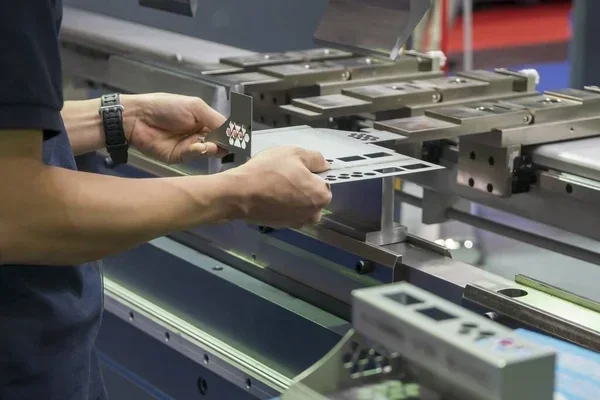
Metal fabrication: coordinating cutting, bending, welding & assembly
Fabrication shops often work with diverse equipment—laser cutters, press brakes, welders, robots—and rely on internal and external operations to complete assemblies.
CoreMBC supports fabrication by providing:
-
Complete visibility over multistep routing (cut → bend → weld → paint → assemble).
-
Automatic detection of bottlenecks, such as overloaded bending or welding stations.
-
Precise tracking of WIP (work in progress) across every operation.
-
Automatic material allocation to ensure sheets, pipes, and profiles are ready on time.
-
Alerts for delays in internal or subcontracted steps.
Result: Assemblies flow smoothly without missing parts or last-minute chaos.

Welding: Control over consistency, certification & quality
Welding processes depend on certified welders, proper preparation, and repeatable quality. Any mistake can cause rework, delays, or safety issues.
CoreMBC helps welding departments with:
-
Welders' certification and validity tracking (WPQR, WPS, EN/ISO standards).
-
Automated routing instructions to ensure correct welding sequences.
-
Traceability of welded joints, materials, and consumables.
-
Non-conformity (NCR) and quality-inspection management.
-
Monitoring subcontracted welding when external services are used.
Result: Welding quality increases while the risk of rework and delays decreases.

Heat treatment: managing furnaces, cycles & lead times
Heat treatment is sensitive to timing, furnace load, and precise temperature control. Delays happen when:
-
furnaces are full,
-
cycles take longer than planned,
-
subcontractors fail to keep promised lead times.
CoreMBC protects heat-treatment through:
-
Cycle scheduling & furnace-capacity planning.
-
Realtime load tracking—what's in which furnace and for how long.
-
Automatic alerts for cycle completion or unexpected delays.
-
Traceability of certificates and batch parameters.
-
Subcontractor status tracking for outsourced heat treatment.
Result: No more surprises, late batches, or missing documentation.

Casting & foundry operations: managing complexity, variability & scrap
Casting involves long cycle times, pattern changes, melt quality control, and high scrap-risk operations.
CoreMBC strengthens foundry management by:
-
Tracking each casting batch, from molds to pouring and cooling.
-
Recording melt parameters (temperature, chemistry, furnace ID).
-
Predicting bottlenecks in molding, pouring, machining, and finishing.
-
Monitoring scrap trends and linking them to suppliers, patterns, or equipment.
-
Coordinating secondary operations, such as fettling, cleaning, and CNC finishing.
Result: Improved casting predictability and reduced scrap-related losses.

Subcontractor management for all metalworking segments
Subcontractor Management for All Metalworking Segments
Regardless of your industry segment—CNC, welding, fabrication, heat treatment, or casting—you often rely on subcontractors for:
-
machining,
-
heat treatment,
-
surface finishing,
-
NDT testing,
-
coating or painting,
-
cutting or forming.
CoreMBC gives you total control over outsourced operations:
-
Track exact quantities sent and received.
-
Monitor lead times, delays, and performance.
-
Record quality issues and document deviations.
-
Receive automatic alerts if a supplier falls behind schedule.
-
Maintain a performance scorecard for each subcontractor.
This drastically reduces the risk of missing parts, late deliveries, or quality failures.

Material delays: the most common cause of production failure
Material Delays: The Most Common Cause of Production Failure
Material shortages can stop an entire production flow. With CoreMBC, you gain:
-
Material-order tracking with real delivery dates.
-
Automatic impact analysis on production if a material is delayed.
-
Alerts when stocks fall below required levels.
-
A reliable overview of raw material availability across operations.
This is crucial in CNC, fabrication, casting, and welding environments where materials are diverse and inventory is complex.

Beyond the ordinary
Conclusion: CoreMBC as the reliability backbone of modern metalworking
Whether you are machining precision components, fabricating steel structures, welding assemblies, casting metal parts, or running heat-treatment furnaces—your business cannot afford uncertainty.
CoreMBC serves as the safety net that ensures:
-
faster reaction to problems,
-
less downtime,
-
higher quality,
-
reliable subcontractors,
-
predictable delivery dates,
-
improved customer trust.
For metal-processing companies that want to stay competitive, CoreMBC becomes the difference between production chaos and controlled, stable, predictable manufacturing.